

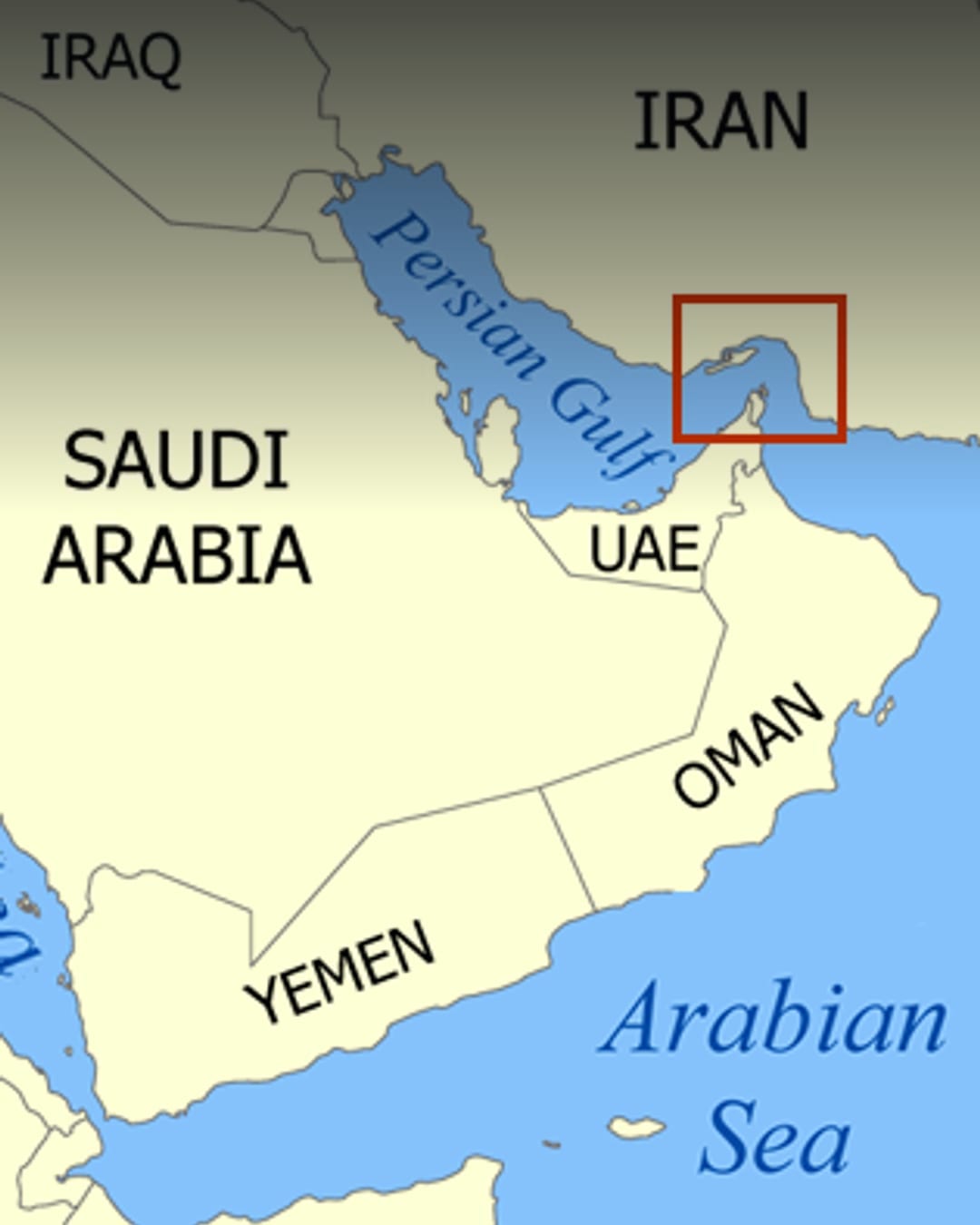
 Image: Strait of Hormuz map - Wikimedia Commons.
- IRGC-linked Tasnim is reported to have said Iran halted message exchanges with the U.S. over Israel's Lebanon and Gaza operations.
- The same reporting says a complete Strait of Hormuz blockade and activation of other fronts, including Bab el-Mandeb, are on the agenda.
- This is an escalation signal, not yet independent proof that Hormuz is fully closed again.
Iran has halted message exchanges with the United States and is putting a full Strait of Hormuz blockade on the agenda, according to reporting that cites the IRGC-affiliated Tasnim News Agency.
The claim is explosive because Hormuz is the central chokepoint in the current U.S.-Iran conflict. But the wording matters. The available reporting says Iran and aligned forces have determined the move is on the agenda as retaliation for Israel's operations in Lebanon and Gaza. That is not the same thing as independent shipping data proving a complete closure is already in force.
What happened
The Jerusalem Post reported Monday that Iran called an immediate halt to talks with the United States over Israel's military activity in Lebanon, citing Tasnim. APA carried a similar account, saying Iran halted message exchanges with Washington and that Iran and its allies had placed a complete Strait of Hormuz blockade, plus other fronts including Bab el-Mandeb, on the agenda.
The political trigger is Lebanon. Iranian officials have repeatedly argued that U.S.-Iran ceasefire or negotiation tracks cannot be separated from Israel's widening operations against Hezbollah and from the Gaza war. Washington has treated those tracks more narrowly, which has created a recurring dispute over what the ceasefire is supposed to cover.
What is confirmed
Confirmed: multiple outlets are now carrying the Tasnim-linked claim that Iran has halted U.S. message exchanges and is threatening a full Hormuz move. Confirmed also: Tasnim is close enough to the IRGC to be treated as a meaningful signal from Iran's hard-security ecosystem, not just a random media rumor.
Also confirmed: Hormuz has already been the bargaining chip in U.S.-Iran talks. Axios reported last week that a draft framework would have reopened shipping through the strait and lifted the U.S. naval blockade in stages if Trump gave final approval. Iran International also reported that Ali Bagheri Kani said shipping procedures in Hormuz would not return to prewar conditions.
 Image: Iran Ministry of Foreign Affairs building in Tehran - Wikimedia Commons.
What is not confirmed
Not confirmed: that Iran has already fully sealed the Strait of Hormuz at the time of publication. A political or military threat can move markets immediately, but NoDechev is not treating the strait as physically closed without shipping data, direct Iranian operational orders, or confirmation from regional maritime authorities.
Also not confirmed: whether the halt covers all indirect diplomatic channels or only the current message exchange track. The public reports do not yet show the full diplomatic mechanics, including whether Qatar, Oman or Pakistan remain active as back channels.
Why it matters
Hormuz is where the ceasefire becomes material. A failed negotiation can be described as a political problem. A blocked strait becomes an energy, shipping, insurance and military problem within hours.
The Bab el-Mandeb reference is important too. If Iran-aligned actors try to pressure both Hormuz and the Red Sea corridor, the story stops being only a Gulf crisis and becomes a two-chokepoint threat to global trade. That would pull in Europe, Gulf states, China and insurers even before a wider U.S. military response.
What to watch next
Watch three things: shipping trackers for actual vessel movement through Hormuz, CENTCOM or Fifth Fleet statements about freedom of navigation, and Iran's foreign ministry for whether it repeats the Tasnim line in official diplomatic language.
The clean read: this is a serious escalation signal from IRGC-linked media. It should be reported as a threat and negotiation rupture, not yet as verified proof that the Strait of Hormuz has been completely closed again.
NoDechev rating: credible escalation signal, operational status unconfirmed. The Tasnim-linked report is real enough to matter; the physical closure of Hormuz still needs independent confirmation.
Also Read
The Hormuz threat sits inside the same dispute over what the U.S.-Iran ceasefire actually covers.
Read the Ghalibaf ceasefire brief ->